
Brain-based learning tools to help students and everyday learners think better. Explore our upcoming card decks and join the waitlist for first access.
TeachBridge Products
The How To Think and The Little Think decks are currently in production! Our first print run is underway! Join the waitlist to be the first to know when they arrive.
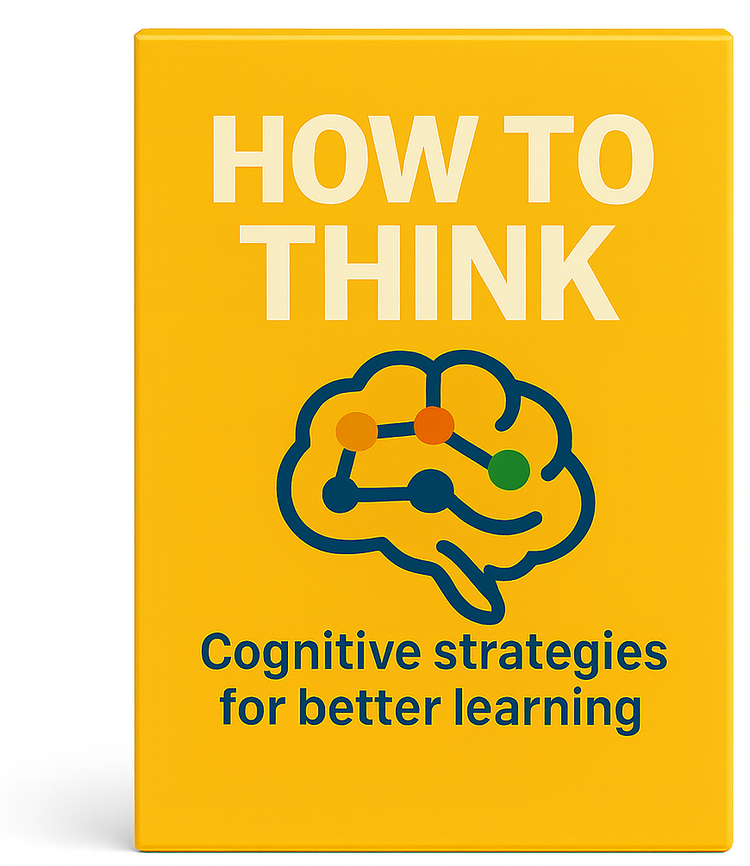
How To Think – Strategy Deck
Cognitive strategies for stronger learning, memory, and focus.
Unlock the mental processes behind great learning. The How To Think - Strategy Deck transforms decades of cognitive and educational psychology into simple, research-based strategies that help learners build real thinking power.
Designed by an educational psychologist, each card introduces a practical, brain-based strategies that supports focus, memory, planning, metacognition, and deeper understanding. In just minutes a day, learners begin to master how to think — not just what to study.
Perfect for classrooms, study sessions, tutoring, and everyday mental fitness.
What You’ll Gain:
Better focus and concentration
Stronger recall and memory
Better planning and study habits
More confident, independent learners
Repeatable strategies you can actually use
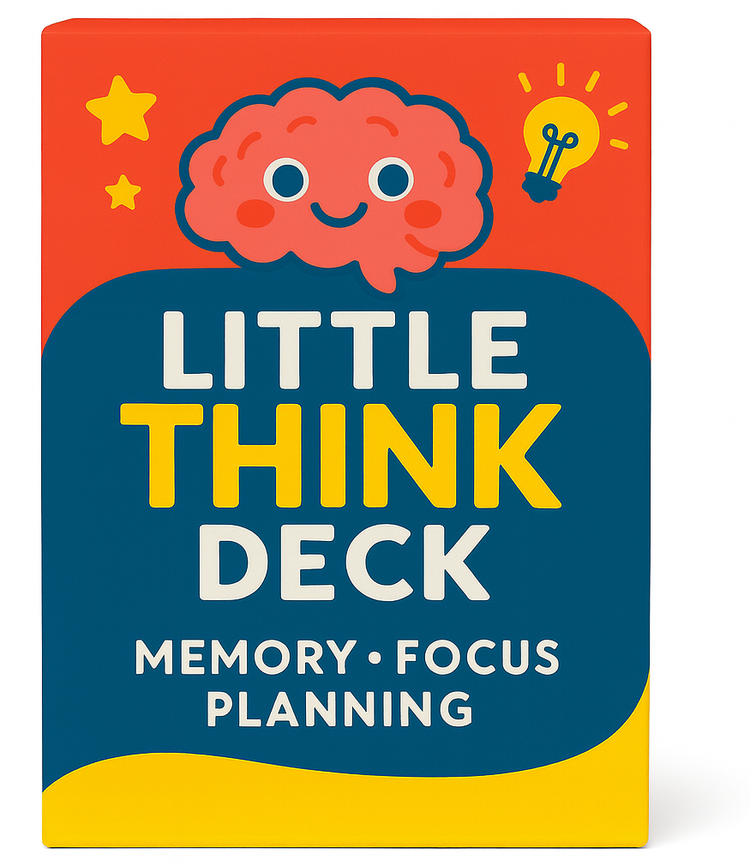
The Little Think Deck
Cognitive building blocks for memory, focus, and planning (Ages 6–11).
Learning how to think starts early. The Little Think Deck turns foundational cognitive skills into playful, age-appropriate strategies that help kids build the habits behind strong thinking and self-control.
Created for early learners and the adults who support them — parents working with their children at home and teachers guiding students in the classroom — each card builds core executive function skills in a child-friendly way that feels fun, doable, and developmentally aligned. The strategies help strengthen memory, attention, flexible thinking, and early planning in ways that fit naturally into everyday routines and small-group learning.
What You’ll Gain:
Better attention and focus
Stronger working memory
Early planning skills
Flexible thinking
Confidence in learning